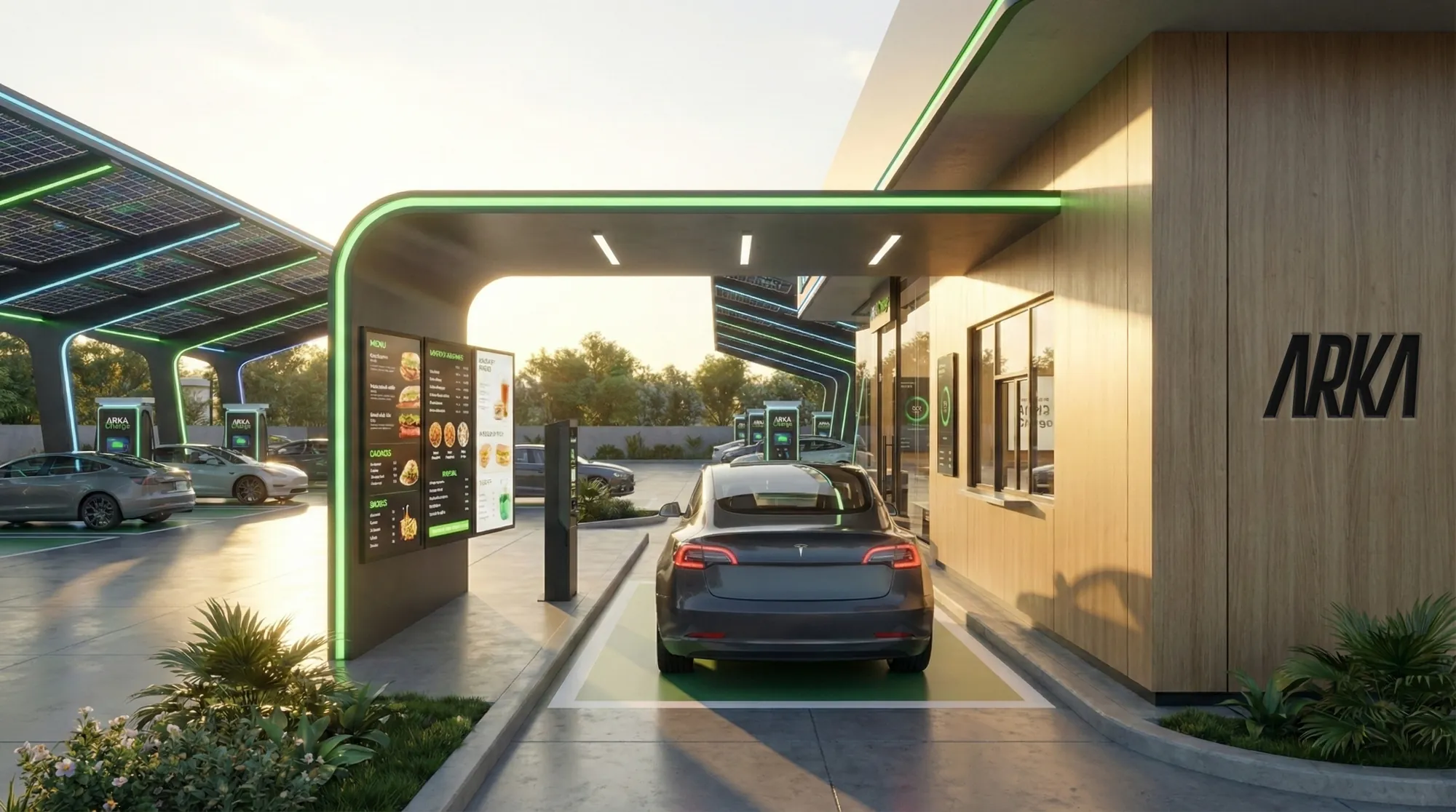
A highway-based, ultra-fast pickup service designed for Indian road travelers, where customers can pre-order essential items and food through a platform and collect them on-the-go at drive-through stations located every 60-80 km.
02- My role
- AI renders, journey storyboard, competitor reviews, station planning, poster and deck
- Team
- Aditya Vellal, Aditya Raikar, Dhanush MD, Harshini Chander
- Course
- Service Design
- Time
- 16 Nov – 11 Dec 2025
What this project covered?
- Service design
- Survey research
- Competitor analysis
- Service blueprint
- Personas
- Storyboarding
- AI renders
- Branding
- Business model
- Operations
- Roadmap
- Poster design
How this was made?
Four of us, two very different ideas. The survey is real: 86 people answered our Google Form. The renders and comic panels were generated with Gemini, the deep-dive personas came from Perplexity, and we cross-checked research between ChatGPT and Claude. Wherever AI made something, you'll see this label:
Where we started.
Break. Boost. Back-on.
ARKA began as an EV charging hub. Charging, we thought, could be a reason to stop rather than a chore.
Vision
To transform EV charging into a seamless and enjoyable part of everyday travel, where charging becomes not a pause in the journey, but a meaningful break.
Mission
To deploy a pan-India network of fast-charging hubs that combine energy, convenience, and comfort. By merging charging technology with retail, work, and leisure spaces, we offer travelers a safe, reliable, and engaging place to recharge themselves and their vehicles.
The hub.
I generated every render. A front end people visit, and a back end that powers it.
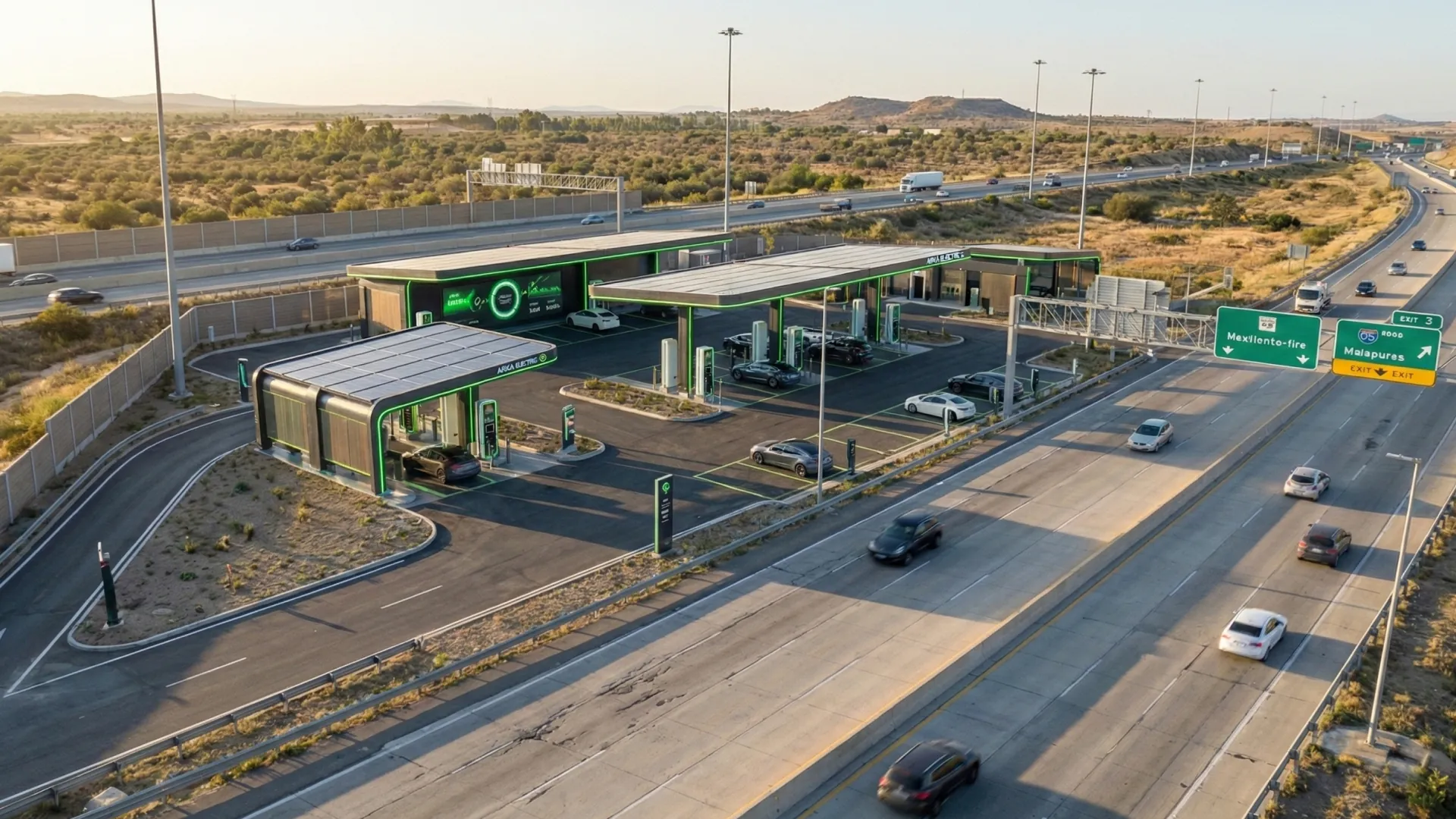 AI-assisted01
Highway hub
Flagship hubs on highways, with smaller urban spokes in malls, tech parks and housing societies.
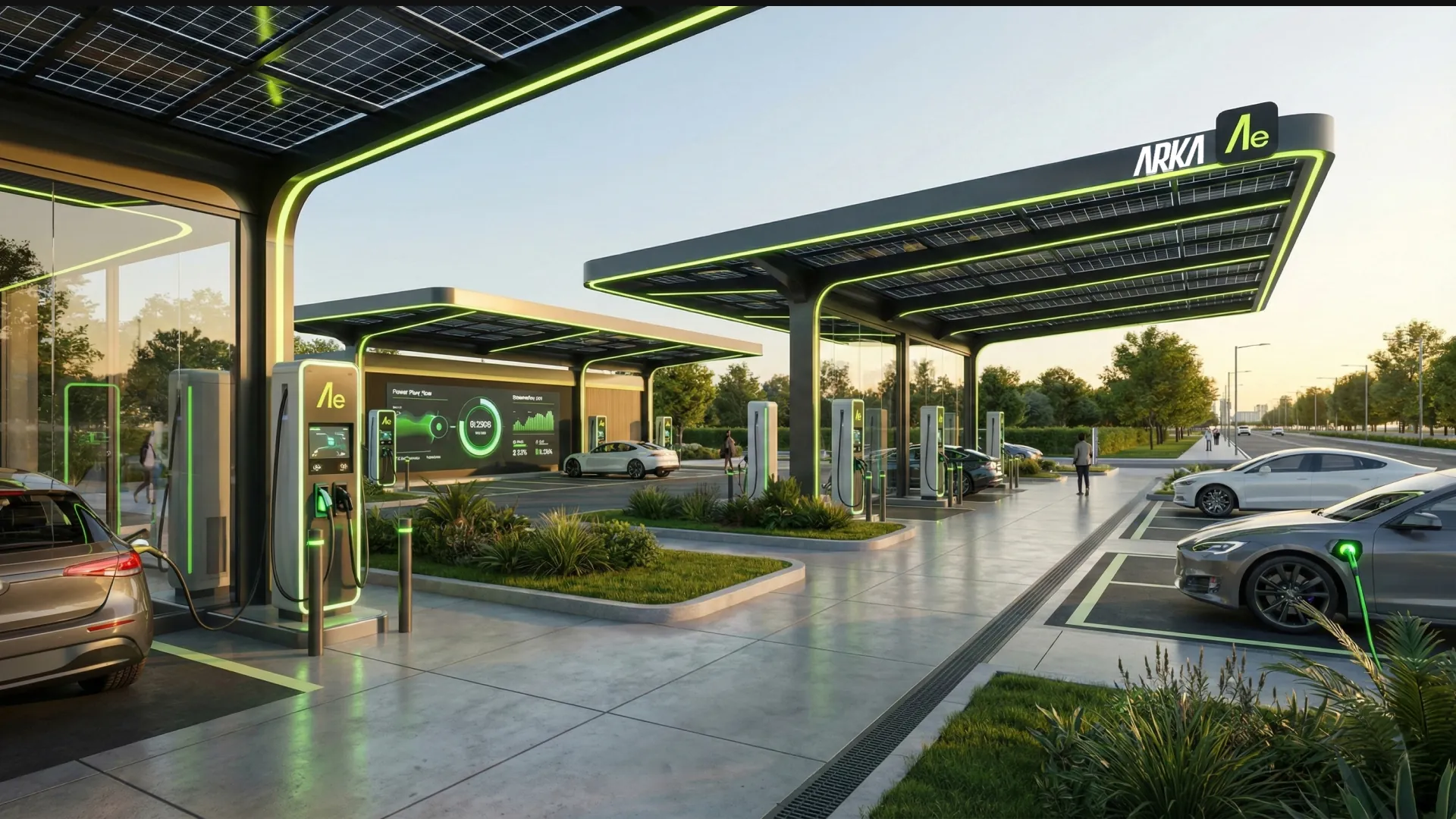 AI-assisted02
Charging bays
A 30–40 minute charge, with slot booking, payments and availability in the app.
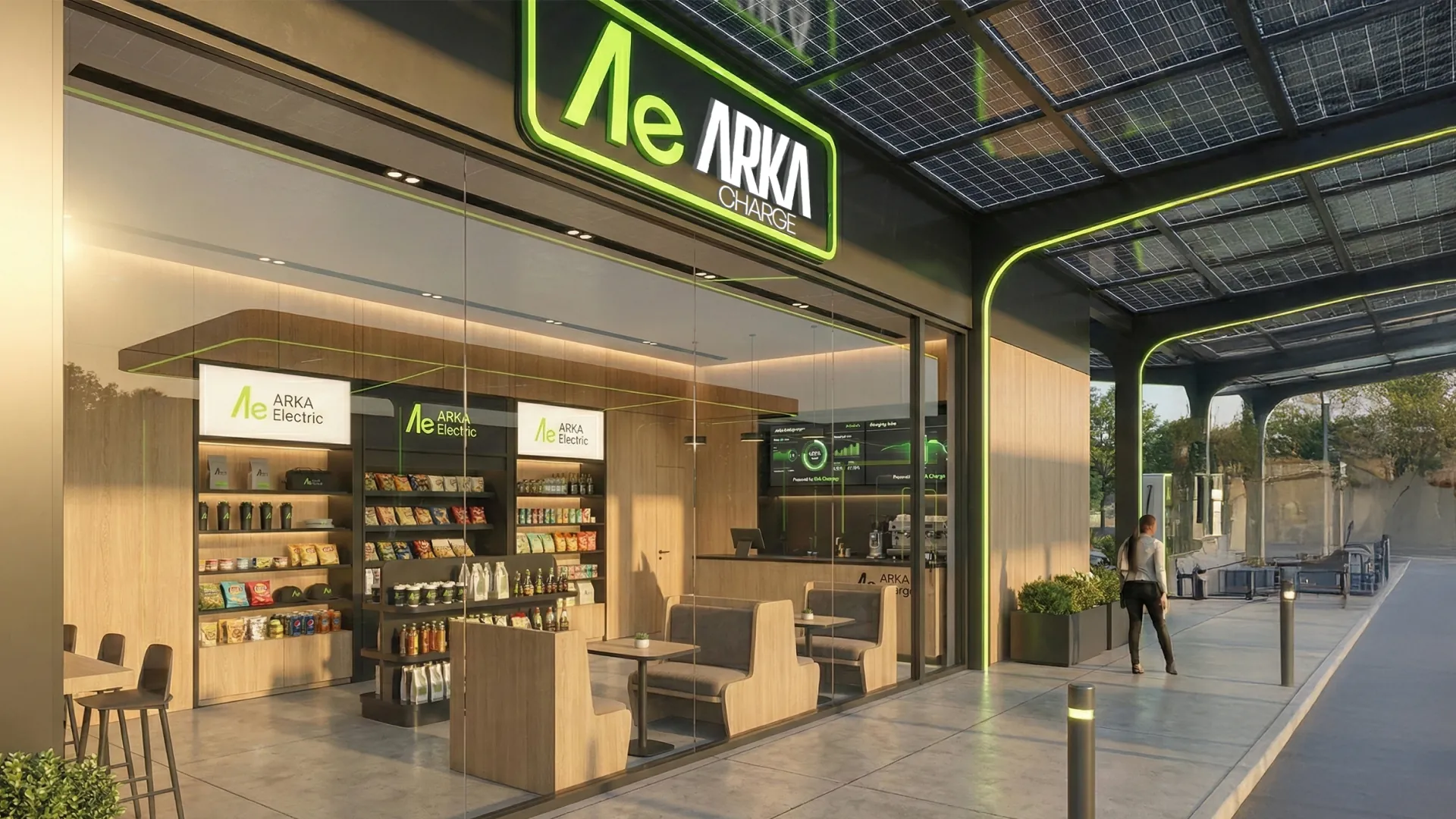 AI-assisted03
The store
F&B, branded retail and co-working passes while the car charges.
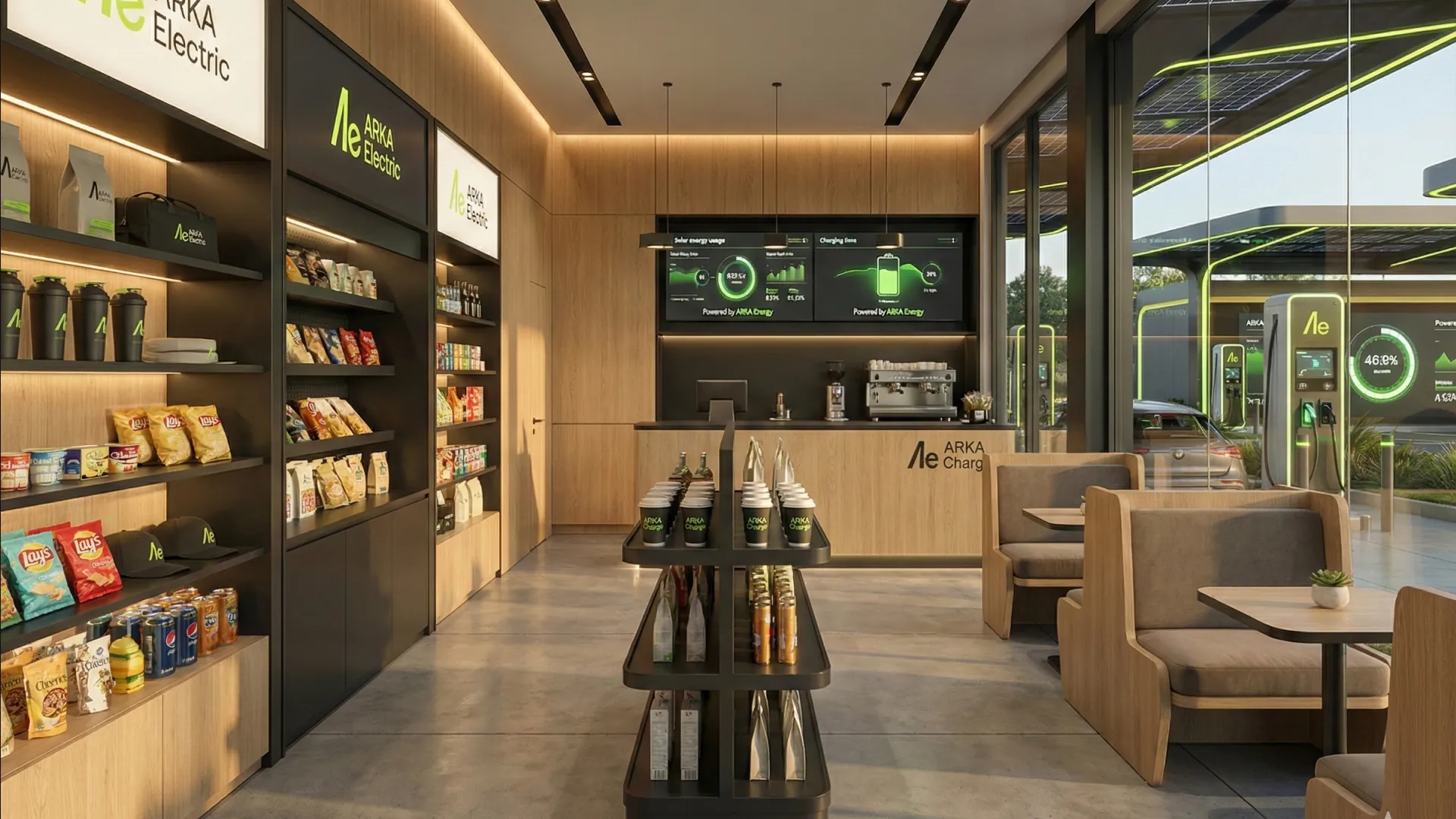 AI-assisted04
Lounge
Café, shelves and seating: explore while you wait.
 AI-assisted05
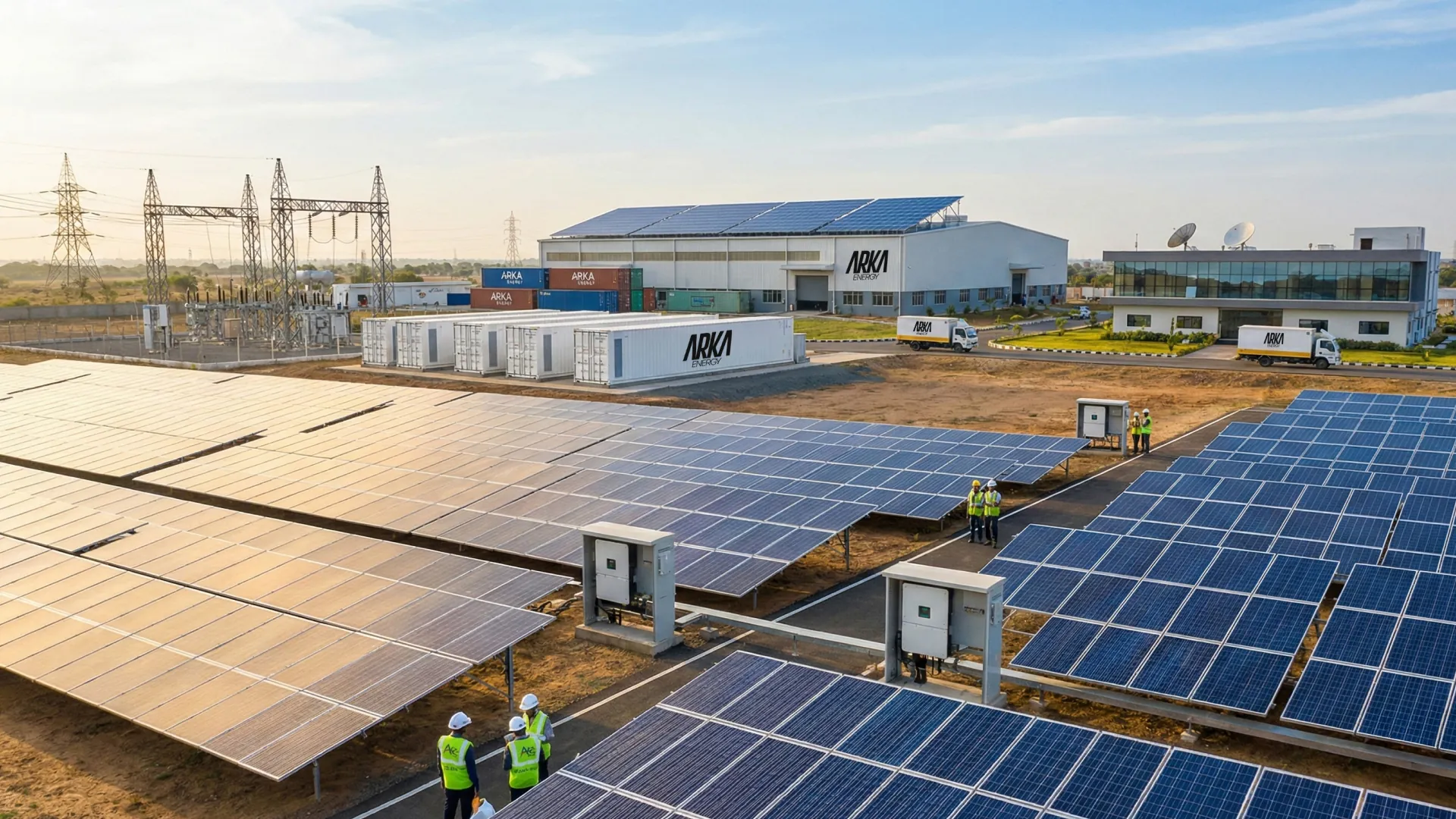
ARKA Energy
The back end: our own solar farms, powering the hubs and selling to DISCOMs.
What we got wrong.
Back to the drawing board
Our first idea tried to do it all: charging, retail, co-working and solar, for every kind of driver. Pull it apart and the gaps were obvious. No clear audience, no named partners, no standard model, no proven need, no way to scale and no plan.
The brainstorm
We were discussing how to make people slow down and get off the highway to take breaks. Then I asked one question: why are we making people slow down? Can't we reverse this and make people go faster? The rest was history.
Me, in our brainstorm
Playing the professor
The best part of that session: we role-played our professor. One of us presented what we'd found, and someone else countered it the way our professor would.
Two AIs, one question
We split research up. I'd ask ChatGPT while a teammate asked Claude the same thing, then we compared answers and kept what held up.
So ARKA flipped from a place you stop at to a stop you barely make: order on the move, pick up in two minutes, keep driving.
The EV side didn't disappear. Stations still have EV charging, clean washrooms and other amenities, but the drive-through leads.
How we fixed it.
Niche target market
People on long highway trips, not every EV driver.
Specified collaborators
Inventory suppliers, payment providers, highway authorities and fuel-station operators.
Standardised
The same station, lanes and SOPs every time.
Definite market need
There's no predictable place to get forgotten essentials on the highway.
Scalable service
Express stations every 60–80 km, premium stations every 100–200 km.
Clear roadmap
From validating demand to a national network in 2–3 years.
- Zerodetour
- Zeroqueue
- Zerouncertainty
Positioning statement
For India’s highway travelers, our service is a pre-order drive-through essentials hub that delivers anything you forgot, exactly when you need it — without entering a single town — using FASTag for an ultra-fast pickup. Unlike fuel stations or dhabas, we provide a predictable micro-warehouse system stocked with everything from baby items to vehicle gear.
The need.
Market + competitors
Indian highways have grown rapidly, but predictable, quick-access essential supply points do not exist.
On the highway, you'll find
- Exists:Fuel stations
- Exists:Dhabas
- Exists:Toll plazas
- Missing:A stop for what you forgotNot on any highway
…but no unified, predictable micro-warehouse network for forgotten essentials.
- 20–45 minutes lost
Every turn into a town adds up.
- Shops closed or out of stock
Availability changes from town to town.
- Unknown stops at night
Poor lighting, no idea what's safe.
- Infants, elders and pets can't wait
Some needs are urgent.
- Impromptu trips
More spontaneous road trips since COVID, so more things forgotten.
Estimated share from our market research. 501 wayside amenities have been awarded and 94 were operational as of Apr 2025 (government).
What their customers say
I went through the reviews for every competitor, from highway rest stops to quick commerce.
 Cube StopHighway rest stop
LikedClean washrooms, ample parking, a kids' play area and good food.
Complained aboutRude or untrained staff, confusing self-service counters, missing items and no bills.
 Shell SelectFuel + convenience store
LikedTrusted fuel quality, a store on site, and courteous staff at good branches.
Complained aboutHigher prices, and service that changes from one station to the next.
 Blinkit · Swiggy InstamartQuick commerce
Liked10-minute deliveries, an easy app and a huge range. Delivery speed was rated positively by 72.4%.
Complained aboutOnly works in cities. Missing or wrong items, and painful refunds.
The research.
Survey 86 responses
86 people answered our Google Form. These are the six things that changed what we designed.
- 89.5%
have dealt with dirty highway washrooms.
Stations get clean washrooms, even though the core is a two-minute pickup.
Which highway issues have you faced?
- 79%
end up buying water or drinks they didn't plan for.
Fast-moving essentials only. Nothing to cook.
What do you usually end up buying unexpectedly?
- 70%
would pre-order and pick up without stepping out.
The drive-through lane became the heart of the service.
Would you prefer a pre-order, no-step-out service?
- 64%
would use it every trip or frequently, with stations every 60–80 km.
Express stations every 60–80 km.
If this existed every 60–80 km, how often would you use it?
- 59%
would trust FASTag to pay automatically. Only 5% said no.
FASTag + UPI at the window, no cash, no stopping to pay.
Would you trust FASTag-based automatic payment?
- 53%
would pre-order in an emergency, and 52% for late-night travel.
Open 24/7, brightly lit, with medicines on the shelf.
Which situations would make you use pre-ordering?
In their words · survey answers
I've skipped eating a lot on the highways because of the long lines, if fast pickup was there it would help for sure
Survey respondentEmergency hometown trips (for example: a funeral) where packing essentials is forgotten and we decide to buy on the go. A 24/7 store/solution to be available on highways would be really helpful!
Survey respondentYes when having a child sleeping in the car and you need coffee
Survey respondentOnce faced not availability of Food store while going to Hyderabad. Had to starve for long time while driving
Survey respondenti usually plan my routes with restaurants and cafe's that have a drive thru facility so i dont waste crucial time incase of time restricted trips
Survey respondentNot really, I prefer getting out of the car after having been seated for a long time and I usually find shops along the way that have the snacks I want. This service would prolly be useful for medical supplies
Survey respondent
The who.
Target users + personas
The poster names four groups; fleets came up in our route research. Behind each group are the persona stories we built with Perplexity. The ones with a dashed border used services we later dropped (medical help, a mechanic, fuel booking), but they shaped who ARKA is for.
Tap a group to meet the people behind it
Families
Kids asleep in the back, elders who need a clean washroom, a car full of luggage.
- The problem
- On a family trip to Mysore with his wife, elderly mother and 10-year-old daughter, his mother complains of chest pain 30 km in. The nearest hospital is 45 minutes away.
- The ARKA moment
- The app points him to the ARKA station 2 km ahead, where first-aid trained staff and an on-call nurse are ready.
- What changes
- A calm plan instead of a panicked drive.
Solo travellers
Driving alone, often at night, and not willing to stop just anywhere.
- The problem
- Left without breakfast for a 10:30 meeting in Mysore. Hungry 45 km in, no time to leave the highway, and she doesn't trust roadside hygiene.
- The ARKA moment
- Fifteen minutes out, ARKA asks if she wants to pre-order. Red Bull, a grilled-cheese sandwich and biscuits, ₹430 by FASTag + UPI, handed to her window in 30 seconds.
- What changes
- A two-minute stop. She reaches the meeting 15 minutes early.
- The problem
- Needs a restroom 90 minutes into a solo drive and won't risk highway toilets, so she skips water instead.
- The ARKA moment
- The app shows the station's time-stamped cleaning log, its rating and a female attendant on duty. She books a solo-use stall for ₹50.
- What changes
- She drinks water normally and arrives composed for her conference.
Bikers
Exposed to the weather, short on storage, and every stop costs them time.
- The problem
- His chain breaks 60 km into a courier route. Every lost hour costs ₹200–400, and a tow costs ₹2,000+.
- The ARKA moment
- One tap on Emergency mechanic, even on 2G. The nearest station sends a tow for ₹300 and fixes the chain for ₹400.
- What changes
- Back on the road in 45 minutes instead of two or three hours.
Impromptu travellers
Spontaneous trips, packed in a hurry, so something always gets left behind.
- The problem
- A Saturday-night getaway to Mysore. The nearest stop is crowded and basic; they want coffee, a clean restroom and somewhere worth stopping.
- The ARKA moment
- The app suggests the premium station 15 km further. They pre-order two coffees and samosas for ₹380.
- What changes
- A 22-minute stop they actually enjoy.
- The problem
- On the way back from Mysore they want Channapatna toys, Maddur vada and a silk scarf, each from a different town, and they must be home by 7 PM.
- The ARKA moment
- They order all three from the app's regional marketplace and collect them at the station on the way out.
- What changes
- Home by 6:45 PM with the gifts, and no detours.
Fleets
Trucks make up about 65% of the traffic on NH-48.
- The problem
- Fuel queues of 30–45 minutes plus a tyre check eat one to two billable hours a day.
- The ARKA moment
- 50 km out he reserves diesel at a locked price; a dedicated truck bay and a mechanic are waiting.
- What changes
- A 15-minute stop instead of 60–90.
Same trip, twice.
Bengaluru → Pune on NH-48
Two cars, the same 840 km and the same four moments our survey kept pointing at. One does it the usual way, one has ARKA. Scroll to drive.
Bengaluru Pune
NH-48 · about 840 km · 14 hours of driving
km 120 Out of water79% buy drinks they didn't plan for
The usual wayTurns off into a town and hunts for a shop that's open.+20 min
With ARKAWater pre-ordered 20 km ahead, handed through the window.+2 min
km 310 The baby needs diapers37% would pre-order when travelling with kids
The usual wayTwo shops later, still not the right size.+30 min
With ARKADiapers waiting at the next ARKA Premium.+2 min
km 560 Hungry at 11 PM52% would pre-order for late-night travel
The usual wayA dimly lit dhaba, and slow service.+25 min
With ARKAA sandwich ordered ahead, collected under bright lights.+2 min
km 720 A pounding headache23% end up buying medicines on the road
The usual wayA detour to find a pharmacy.+20 min
With ARKAParacetamol and ORS, picked up in under two minutes.+2 min
The usual way+1h 35m
With ARKA+8 min
Same trip, same needs: ARKA gets you there 1h 27m sooner.
Detour times sit inside the 20–45 minutes we measured for a turn into town; pickups are the poster's under-two-minute promise. Survey numbers are from all 86 responses.
Why NH-48?
It's a huge IT and industrial corridor. A flight is 1.5 hours, but door to door it's closer to 6.5; driving takes 14 hours but gives freedom, luggage space and no cab reliance.
- About 40,000–50,000 passenger car units a day on key stretches
- Trucks 65%, cars 25%, buses 10%
- Between Chitradurga and Hubballi (200 km), very few premium, women-safe restrooms
- Drivers get drowsy around Haveri and Ranebennur, with no safe place to nap
The journey.
Storyboard by me
I storyboarded the journey and generated each panel for the centre of the A2 poster. A traveller, a forgotten need, and a stop that takes under two minutes.
AI-assisted
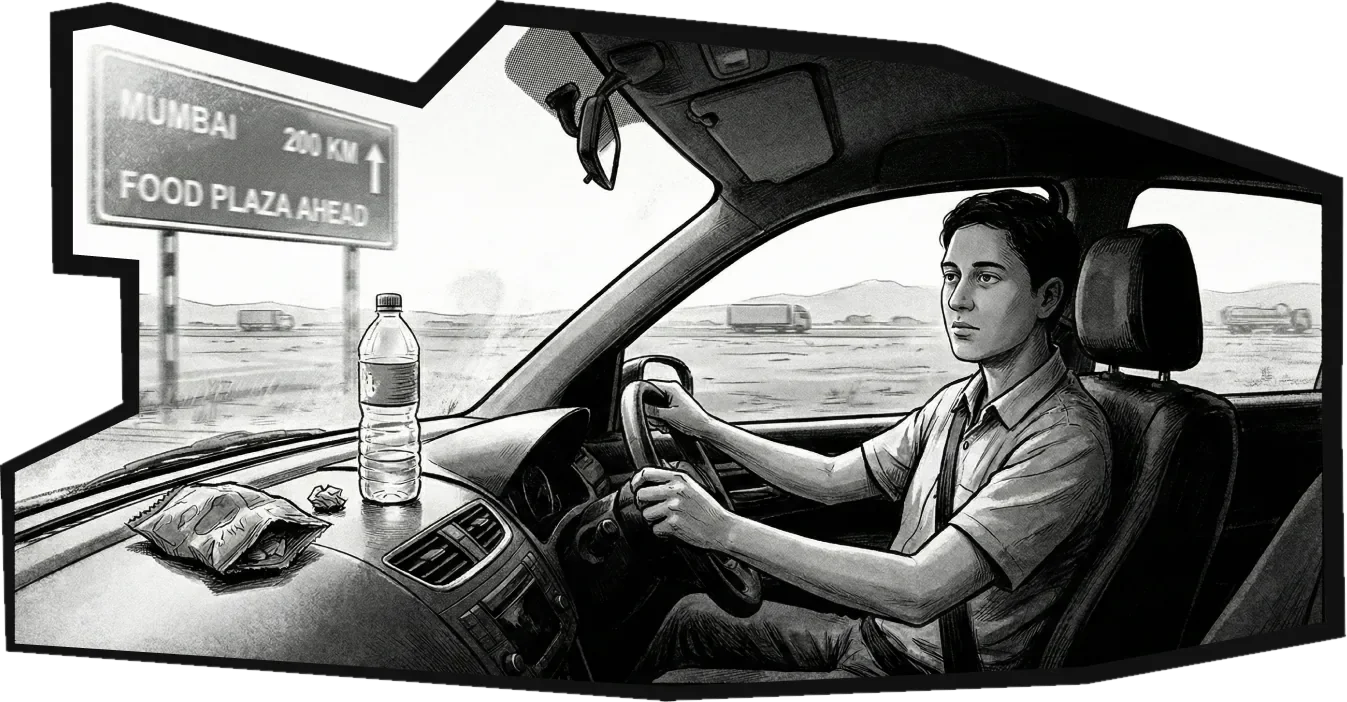
01On long highway journeys, travelers often realize needs too late.. 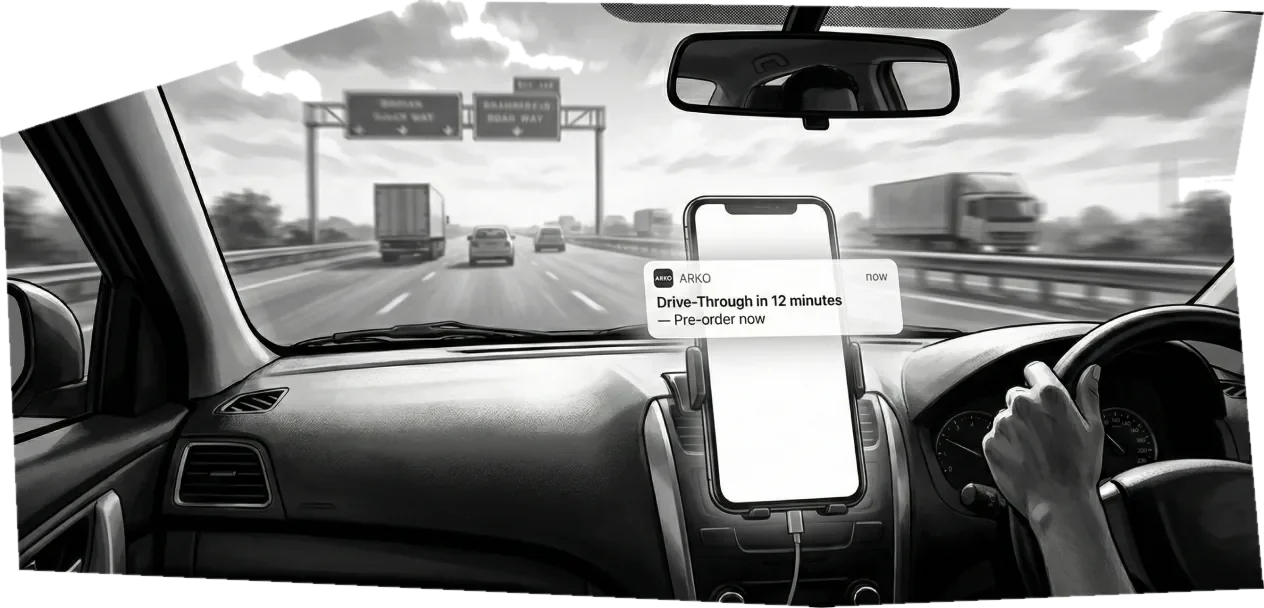
02The service predicts needs before the problem escalates 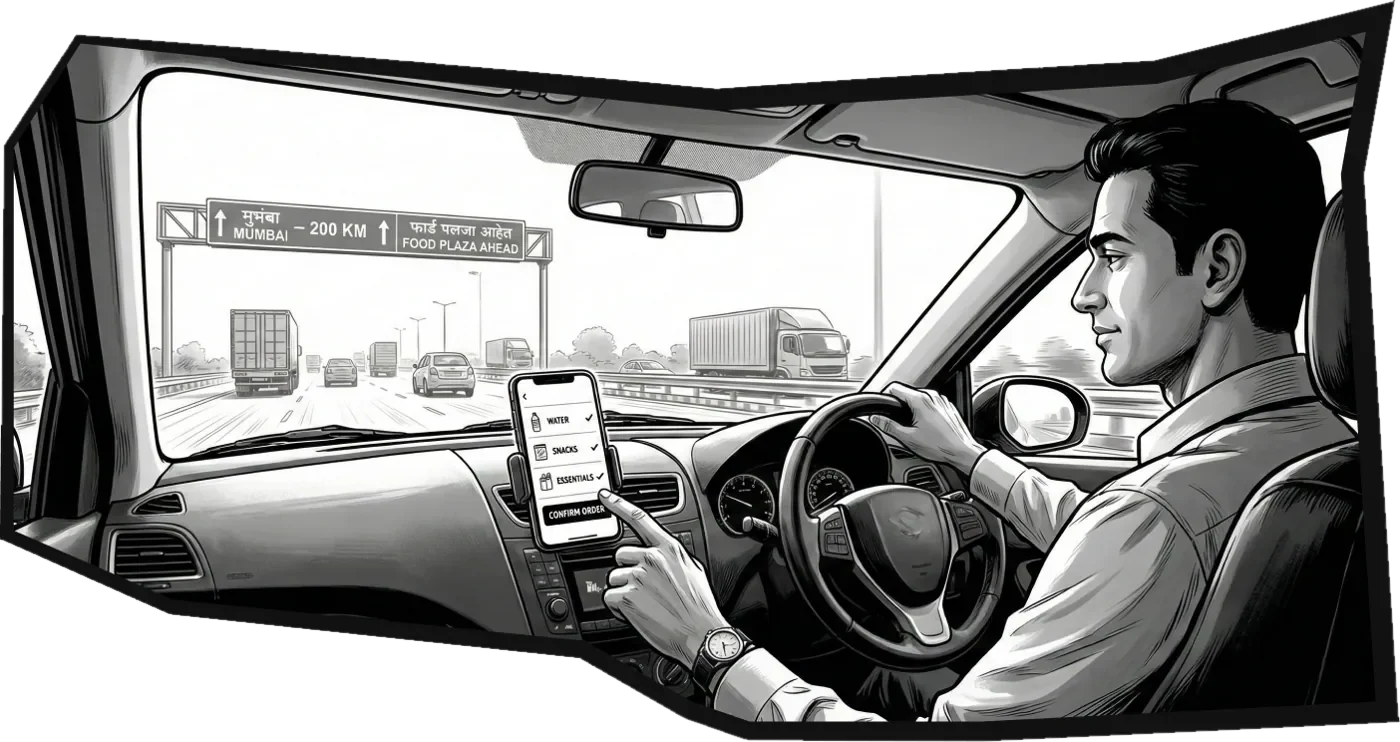
03Orders are placed on the move, without detours. 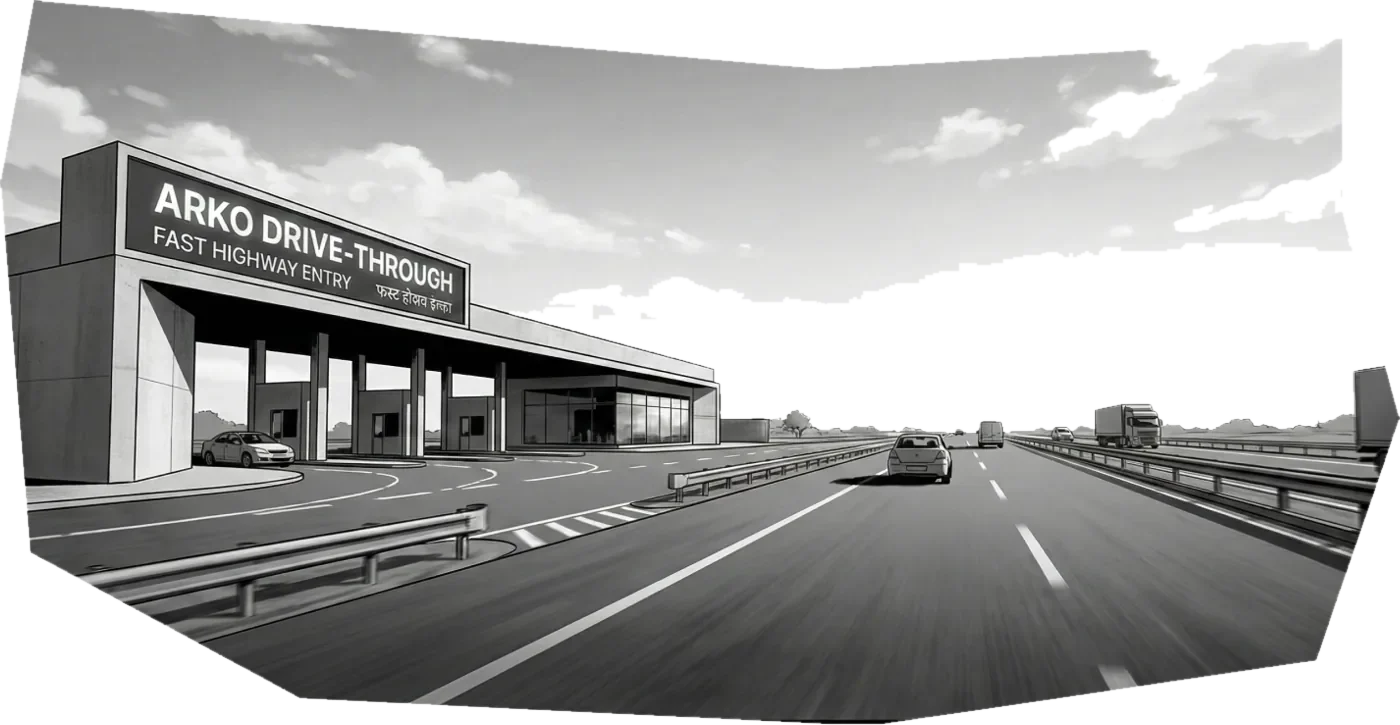
04The station is designed for fast highway entry & exit. 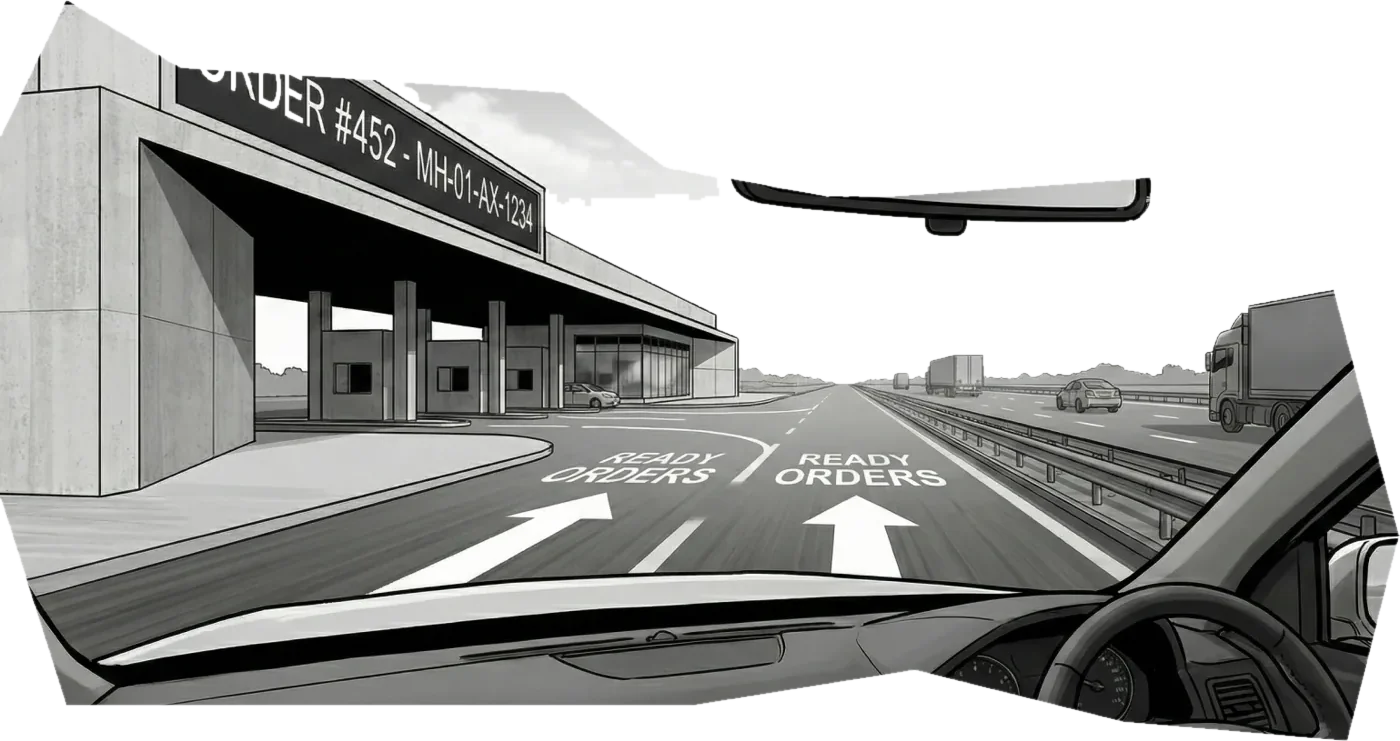
05Clear lane logic removes confusion and waiting. 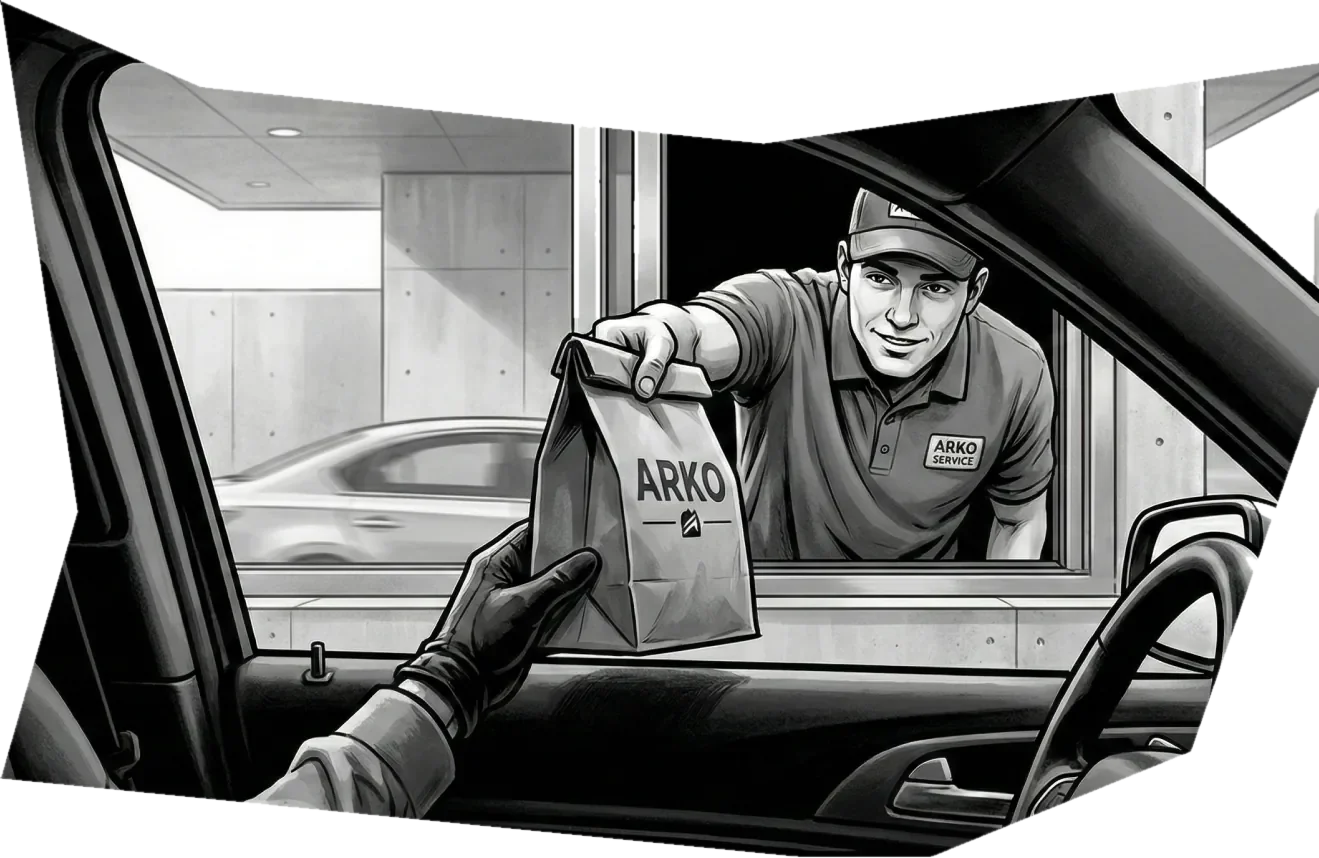
06Pickup happens in under 2 minutes — without leaving the vehicle. 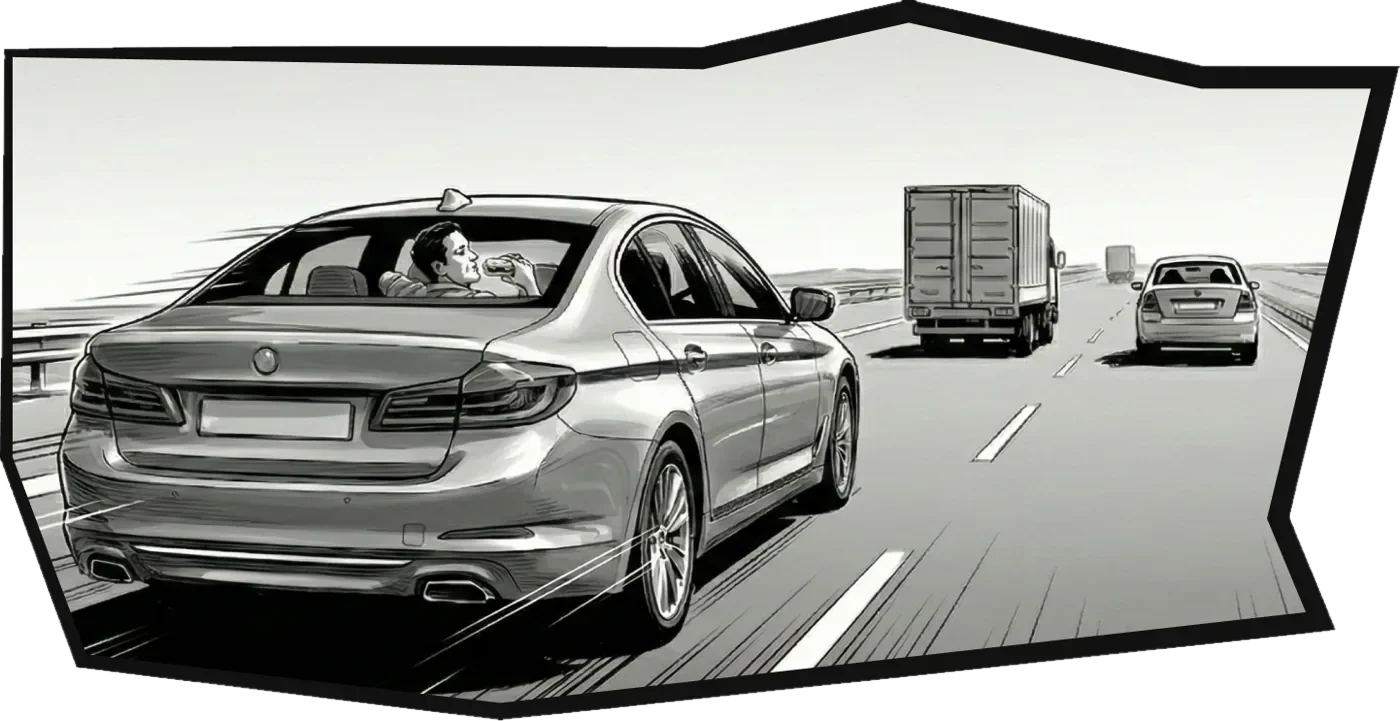
07The journey continues uninterrupted. 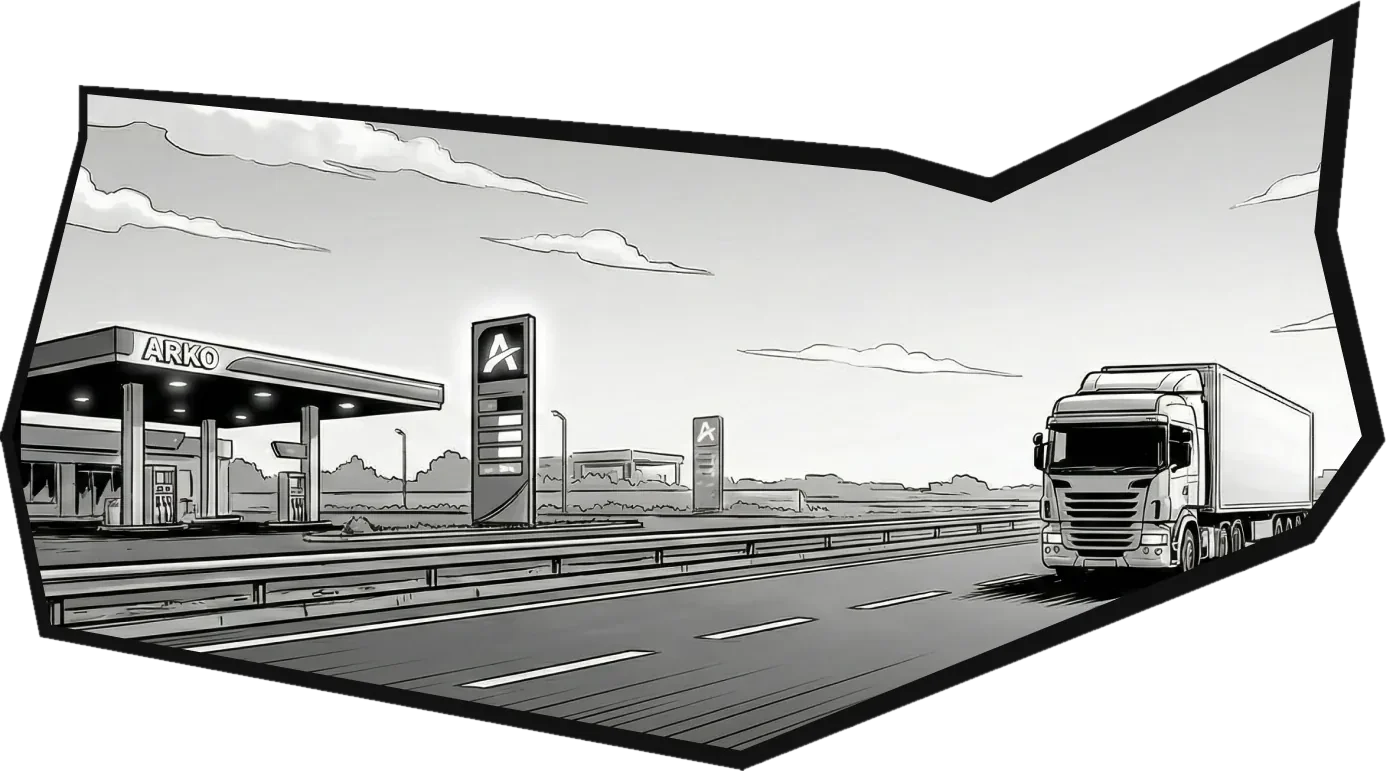
08ARKA turns highway stops into predictable, safe service moments.
The operation.
Daily operations
- 24/7 station operations
- Separate drive-through lanes for cars, bikes and commercial vehicles
- Maximum 2-minute pickup SLA
Order flow
- User notified 10–20 km before station
- Pre-order via app / car UI
- Order queued and pre-packed
- Staff hands over order at pickup window
- User exits and continues journey
Inventory strategy
- Fast-moving SKUs only
- Localized demand forecasting
- Daily replenishment for perishables
- 105 items across nine categories, from ORS to a travel pooja kit
Rollout context
- Highway visibility
- Safe ingress and egress
- Night lighting
- Female-friendly staffing
- Multilingual UI (Hindi, English, Kannada/Marathi)
Who it takes
Nine stakeholders keep a station running. Point at anyone to see their part.
- Highway travellers: Order on the move and pick up at the window.
- Drive-through staff: Pack orders ahead and hand them over in under two minutes.
- Inventory suppliers: Keep fast-moving essentials stocked, with daily refills for perishables.
- Payment providers: FASTag and UPI, so paying never slows the lane.
- Fuel-station operators: Partner sites and power along the highway.
- Waste management: Clear packaging waste and keep the washrooms clean.
- Highway authorities: Permissions, land and safe entry and exit.
- Insurance providers: Cover the station, staff and stock.
- Travel influencers: Spread the word among road-trippers.
What NHAI asks for
I went through NHAI's wayside-amenities guidelines (the Highway Nest programme) to see what a station needs before it can open.
- 1 haminimum plot (10,000 sq m); typical sites are 4–5 acres
- 40–60km: the recommended gap between wayside amenities
- 75%of the plot kept open for parking, movement and landscaping
Access permission from MoRTH
Applied for by the operator; NHAI provides access up to the right of way.
Land-use conversion and layout approval
All statutory approvals, and NHAI signs off the designs.
At least 1 km from a toll plaza
And 30 km from NHAI's own Highway Village sites on the same side.
Free toilets and drinking water
Separate toilets, a baby-care room, and car, bus and truck parking are mandatory.
Source: NHAI, Wayside Amenities expression of interest.
Behind the counter
Facility operations
- Opening/closing procedures
- Washroom cleaning cycles
- AC/ventilation check
- Water supply, waste disposal
- Parking area management
- Security surveillance
Vendor management
- Supplier ordering
- Stock procurement (food, toiletries, medicines)
- Vendor relationship management
- Quality checks & audits
- Fuel/electricity coordination
Safety & emergency
- Fire safety checks
- Medical emergency response
- Evacuation and signage
- CCTV monitoring
- Lost and found system
- Night-time driver safety checks
Finance & compliance
- Daily cash flow & reconciliation
- Payroll handling
- GST & regulatory compliance
- Licensing & permits
- Insurance management
The business.
Revenue streams
- Retail sales
- Convenience premium
- Brand collaborations
- Fleet tie-ups
- Priority pickup lanes
- Data insights
Does a station pay for itself?
Set the traffic and watch the cars that stop. Traffic, stop rate and basket come from our unit-economics sheet; fixed costs are the poster's ~₹5.2 lakh a month.
Live 0 orders handed over
450orders a day
One month: what we keep vs what it costs
Break-even at 289 orders a day
| 15k vehicles · 3% stop | 30k vehicles · 6% stop | |
|---|---|---|
| orders a day | 450 | 1800 |
| One month: what we keep vs what it costs | ₹2.9 lakh | ₹27.2 lakh |
The margin is my assumption: at 20%, break-even lands at about 289 orders a day, inside the poster's estimate of 250–300.
| Role | Monthly cost |
|---|---|
| Store supervisor | ₹35,000 |
| Drive-through executives × 4 | ₹1,00,000 |
| Order prep stall × 6 | ₹1,76,000 |
| Inventory & store manager | ₹30,000 |
| Janitorial staff × 2 | ₹18,000 |
| Security staff × 2 | ₹20,000 |
| Mechanic + support staff | ₹30,000 |
| Total · 17 people | ₹4,09,000 |
Implementation plan
One to three years, in three phases.
- Phase 1 · Year 1
Pilot
- 3 pilot stations on high-traffic highway stretches (e.g., NH-48)
- Civil + drive-through setup: ₹80–100 lakh
- Tech + signage + POS: ₹10–15 lakh
- Total CAPEX / station: ₹1–1.1 crore
- OPEX per station: ~₹5.2 lakh a month
- Break-even achieved at ~250–300 orders/day
- 12–14 staff, 24/7 rotational shifts, centralized HR payroll + training
- Phase 2
Stabilization
- Expand to 10–12 stations
- Standardize: layout, drive-through SOPs, packaging, staff training manuals
- Introduce ARKA combo products (high-margin)
- Financial outcome: unit economics validated, predictable demand curves, data-driven inventory planning
- Phase 3
Network play
- 25+ stations
- Introduce fleet subscriptions, premium lanes and dynamic pricing (peak-hour convenience fee)
- Begin franchise / PPP discussions
The roadmap: from month 0 to year 3
- 0–3 months
Validate demand & set foundation
- 3–6 months
Build an MVP and test
- 6–9 months
Soft launch on a major route
- 9–12 months
Stabilize service & improve automation
- 12–18 months
Expand & create consistent brand
- 2–3 years
Scale nationally & integrate
Keeping it steady.
- Establish
Establishing stability
- Operational: SOP-led operations, redundant staff for peak hours, fail-safe power + network systems
- Trust: time-stamped hygiene logs, visible staff identity, customer service escalation built into the app
- Financial: cost predictability, high-margin curated SKUs, repeat user patterns
- Envision
Envisioning
Short-term vision: ARKA becomes “The default stop Indians trust on highways”.
- Car UI-native ordering
- Predictive rest-stop recommendations
- Personal travel profiles
- Subscription-based frequent-traveler benefits
- Reposition
Repositioning
From ‘Highway convenience stop’ to ‘India’s highway service infrastructure layer’.
- Expand on the Golden Quadrilateral
- Tiered stations: Express (60–80 km), Premium (100–200 km)
- PPP models with NHAI, franchise-led expansion, B2B fleet ecosystems
Watching it work
- CCTV analytics
- POS data
- App usage heatmaps
- Customer ratings
Live metrics tracked
- Vehicle count / hour
- Order value
- Conversion rate
- Abandoned rates
- Avg pickup time
- Staff response times
How we hope it feels
Reviews we imagined for the poster. Not real customers.
Imagined reviews
- ★★★★Late-night travel finally feels safe
I hate stopping at shady dhabas after 11 PM. This was brightly lit, secure, and didn’t even need to step out. Felt confident for the first time while driving alone at night.
- ★★★★★Saved us during our baby’s nap time!
We pre-ordered milk, fruit purée, and water while driving from Pune to Satara. Just rolled down the window, picked it up, and continued without waking the baby. Absolute lifesaver for parents!
- ★★★★Quickest highway stop ever
Ordered Red Bull and chips ahead. Reached, scanned, and boom — 30 seconds, done. No getting down, no crowds. Should be there on every highway!
- ★★★★★Great for pet parents!
Picked up dog treats and an extra bottle for my pup from the drive-through. Super easy. Would love more pet options in future.
The poster.
A2 print
Everything above, on one A2 sheet. I formatted it (and the deck), and generated the comic at its centre. Zoom in, or jump to a part.
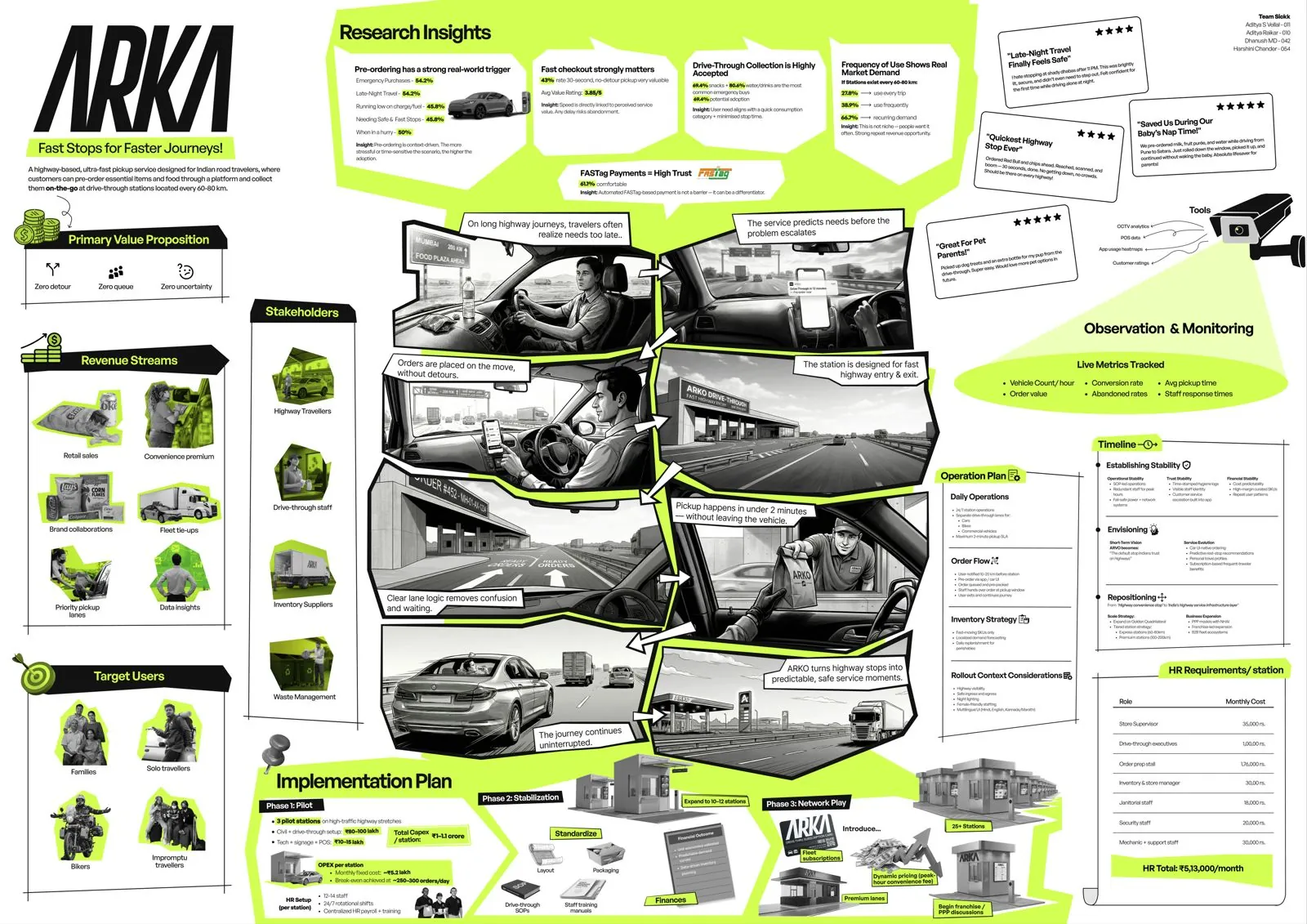 Double-click, pinch or + to zoom
The brand.
ARKA is Sanskrit for the sun. We started with EV charging, and most of that electricity would come from the sun, so the name stuck. Electric green on black, a slanted wordmark that looks like it's already moving, and Gobold for anything loud.
 Wordmark
 Icon logo
 ARKA Energy
 ARKA Charge
Fast stops for faster journeys
Fast stops for faster journeys
My part.
- Asked
The question that flipped the project: why make people slow down, when we could help them go faster?
- Generated
Every AI render: the EV hubs, the drive-through and all eight comic panels.
- Storyboarded
The journey at the centre of the A2 poster, panel by panel.
- Reviewed
Customer reviews for every competitor, from highway rest stops to quick commerce.
- Researched
Government permissions, and how much land a pickup station needs.
- Mapped
The stops along the highway on Google Maps. We designed the station layout together.
- Formatted
The presentation and the A2 poster, together with the whole team.
- Role-played
Our professor, so every idea got countered before it reached the real one.
Aditya Vellal (me), Aditya Raikar, Dhanush MD and Harshini Chander. We researched separately and built it together, so a lot of this overlaps. The final presentation went really well.
- Test the two-minute promise with a pop-up pickup on a real stretch of highway.
- Talk to truck and fleet drivers. They're most of the traffic on NH-48, and we only met them through AI personas.
- Prototype the in-car ordering flow, so pre-ordering never means picking up a phone while driving.